MP BOARD English Medium Social Science
MP BOARD English Medium Social Science – This post is important for students preparing for Class 10th Social Science in English medium. Important questions asked in previous years’ annual examinations of Social Science subject have been written in this post along with answers. Some or many of these questions may be asked in the upcoming annual examination. Students should continue with their preparation and also study these questions for the preparation of the upcoming annual examination.
MP BOARD 2026- Objective Question Based Self Test – Social Science Class 10
Question 1 – Write the names of biological resources.
Answer – Biotic resources:
These resources are obtained from the biosphere. Humans, flora, fauna, fisheries, livestock, etc. are the names of these resources.
Question 2 – What is sustainable development?
Answer – Sustainable economic development is development that occurs without harming the environment and that the current development process does not neglect the needs of future generations.
Question 3 – Write two characteristics of alluvial soil.
Answer – (i) Alluvial soils are very fertile.
(ii) They contain potash, phosphorus, and lime.
Question 4 – What is soil erosion?
Answer – The process of soil erosion and its flow is called soil erosion.
Question 5 – By what names is jhuming agriculture known?
Answer – Jhum agriculture is known as ‘Milpa’ in Mexico and Central America, ‘Conuco’ in Venezuela, ‘Roca’ in Brazil, ‘Masole’ in Central Africa, ‘Ladang’ in Indonesia, and ‘Ray’ in Vietnam.
Full marks may be given even if you write any two names.
Question 6 – Write two characteristics of commercial agriculture.
Answer – Two characteristics of commercial agriculture are:
(i) High yields are achieved through the use of high-yielding seeds, chemical fertilizers, and pesticides.
(ii) In this type of farming, a single crop is grown over a large area. It requires a lot of capital and labor.
Question 7 – Write two importances of manufacturing industry.
Answer – Two importances of manufacturing industry are:
(i) Manufacturing industry not only helps in modernizing agriculture, it also reduces our dependence on agriculture by providing employment in secondary and tertiary services.
(ii) Export of manufactured goods increases commercial trade, which in turn generates significant foreign exchange.
Question 8 – Write two harmful effects of air pollution.
Answer – Two harmful effects of air pollution are:
(i) Leakage of toxic gases can have devastating and far-reaching effects.
(ii) Air pollution has adverse effects on human health, animals, plants, buildings, and the entire environment.
Question 9 – Why is road transport more important than rail transport?
Answer – The importance of road transport over rail transport is as follows:
(i) Construction costs of roads are much lower than rail lines.
(ii) Roads can be built even on rugged and fragmented terrain.
Question 10 – Write the name of the world’s longest highway tunnel.
Answer – The world’s longest highway tunnel, the ‘Atal Tunnel’, is 9.02 kilometers long and was built by the Border Roads Organisation. This tunnel connects Manali to the Lahaul-Spiti Valley year-round. This tunnel is located in the Pir Panjal range of the Himalayas.
Question 11 – What percentage of India’s trade is conducted by sea?
Answer – 95% of India’s trade is conducted by sea.
Question 12 – When was air transport nationalized? Write.
Answer – Air transport was nationalized in 1953.
Question 13 – What goods were traded along the Silk Road? Write.
Answer – The Silk Road transported Chinese silk, Chinese pottery to Western countries, and textiles and spices from India and Southeast Asia to other parts of the world. On the return journey, precious metals like gold and silver reached Asia from Europe.
Question 14 – What food items did our ancestors not have five hundred years ago?
Answer: Potatoes, soy, peanuts, corn, tomatoes, peppers, sweet potatoes, and many other foodstuffs were not available to our ancestors about five hundred years ago.
Question 15 – Why was London known as a finishing center?
Answer – Textile finishing took place in London, which involved English textile merchants, from purchasing wool to dyeing. London was known as a finishing center because of its finishes.
Question 16 – Why did the demand for workers in many industries fluctuate seasonally?
Answer – The demand for workers in many industries fluctuated seasonally. Gasworks and taverns had a significant winter season, requiring more workers during this time. Bookbinders and printers also needed additional workers during Christmas, before December. Ship repairs, cleaning, and decorations at ports were also carried out during the winter. In industries where production fluctuated with the seasons, industrialists preferred to employ laborers rather than machines.
Question 17 – In which countries did printing technology first develop?
Answer – The earliest printing technology developed in China, Japan, and Korea. This printing was done by hand.
Question 18 – What work did Johann Gutenberg do in the printing field?
Answer – He used his knowledge and experience in his new invention. The olive press became the model for the printing press, and molds were used to cast the metal shapes of the letters. Gutenberg had built his machine by 1448. He printed his first book, the Bible. It took him three years to produce 180 copies, which was quite fast for the time.
Question 19 – Write two consequences of printing technology.
Answer – The following are two consequences of print culture:
(i) The advent of the printing press created a new readership.
(ii) Religion spread. The publication of magazines began.
Question 20 – Write the names of famous women writers of the nineteenth century.
Answer – Women writers were leading among famous novelists. Jane Austen, the Bronte sisters, George Eliot, etc.
Question 21 – Write two characteristics of the secondary sector.
Answer – Two characteristics of the secondary sector are:
(i) Under this, natural products are transformed into other forms through manufacturing systems.
(ii) This sector is linked to various types of industries.
Question 22 – What do you understand by the tertiary sector? Write.
Answer – Activities that contribute to the development of the primary and secondary sectors fall under the tertiary sector.
Because these activities create services rather than goods, it is also called the service sector.
Question 23 – Where are multinational companies established?
Answer – Multinational companies establish production units in locations close to the market, where skilled and unskilled labor is available at low costs, and where the availability of other factors of production is assured.
Question 24 – Name two multinational companies.
Answer – (i) Ford Motors, Mahindra
(ii) Amazon, Patni Computer, etc.
Question 25 – What is land degradation?
Answer – Land degradation is the loss of land from cultivation due to human activities.
Overgrazing, deforestation, and mining have played a major role in this.
Question 26 – What is sheet erosion?
Answer – In areas where water flows downhill, the topsoil is eroded and washed away with the water. This is called sheet erosion.
Question 27 – Write two characteristics of plantation agriculture.
Answer – (i) A single crop is grown over a large area.
(ii) This agriculture is carried out with the help of large capital and labor.
(iii) Its produce is used as raw material in industries.
(iv) Tea, coffee, molasses, sugarcane, and banana are important plantation crops in India.
Question 28 – Write two characteristics of primitive subsistence agriculture.
Answer – (i) This agriculture is carried out on small plots of land using primitive agricultural tools and with the help of family or community labor.
(ii) This agriculture depends on monsoon, soil fertility, and environmental conditions.
Question 29 – What is the automobile industry?
Answer – The automobile industry is a means of rapid transportation of passengers and goods. Trucks, buses, cars, motorcycles, scooters, and three-wheelers are manufactured at various centers in India. After liberalization, there has been a tremendous increase in modern models of cars, two-wheelers, and three-wheelers in this industry.
Question 30 – What is a cooperative industry?
Answer – Industries whose ownership is in the hands of the producers and workers who supply raw materials. In these, the division of profits and losses is also proportional, such as the sugar industry of Maharashtra and the coconut-based industries of Kerala.
Question 31 – Why is air transport more important in the North Eastern states?
Answer – Large rivers, dissected terrain, dense forests, frequent floods, etc. are common in the North Eastern states of the country. Therefore, air transport is a more important means there
Question 32 – What is meant by the Pradhan Mantri Gramin Sadak Yojana (PMGSY)?
Answer – This project specifically encourages roads connecting rural areas and villages to cities. A special provision of this project proposes connecting every village in the country to cities through paved roads.
Question 33 – What means of achieving independence did Gandhiji describe in “Hind Swaraj”?
Answer – Mahatma Gandhi said that British rule in India was surviving due to the cooperation of Indians. If the people of India withdrew their cooperation, British rule would collapse within a year and independence would be established.
Question 34 – Who were indentured laborers?
Answer – During the colonial period, people were transported to Fiji, Guyana, and the West Indies under an agreement to work. This agreement was called “girmit,” which later led to the term “indentured laborers.”
Question 35 – What does it mean when we say that the world began to shrink in the sixteenth century?
Answer – Shrinkage refers to the increased interaction between different continents. By the sixteenth century, European travelers discovered the sea route to Asia. They crossed the Western Ocean and reached the Americas, making the modern era seem much smaller.
Question 36 – Why was World War I called an industrial war? Write.
Answer – Because machine guns, tanks, airplanes, and chemical weapons were used on a massive scale in this war. All these things were the products of industry. The devastation and destruction wrought by the war would not have been possible without industrial power.
Question 37 – What problems did weavers and artisans face at the end of the nineteenth century?
Answer – (i) They had to buy raw cotton at exorbitant prices.
(ii) Now production began in Indian factories. The market was flooded with machine-made goods.
(iii) Weavers and artisans could not compete with machine-made goods.
Question 38 – Write two functions of the gomasta.
Answer – The gomasta supervised weavers, collected goods, and checked the quality of cloth.
Question 39 – How did print culture influence the French Revolution?
Answer – Thinkers attacked superstition and the autocratic power of the state in their writings. Their readers began to view the world from a new, critical, questioning, and logical perspective. Cartoons and caricatures incited people against monarchy. Printing gave rise to a new culture of debate.
(Students should be awarded full marks for writing any two arguments.)
Question 40 – Explain the role of the Vernacular Press Act in suppressing nationalist newspapers.
Answer: The Vernacular Press Act of 1878 gave the government the right to censor reports and editorials published in the vernacular press, declare reports seditious, confiscate newspapers, and seize printing machines. This act suppressed nationalist newspapers.
Question 41 – Give two suggestions to strengthen political parties so that they can function better.
Answer: (i) People who desire reform should voluntarily join political parties.
(ii) People should exert pressure on political parties. This can be done through writing, publicity, and the media.
Question 42 – What is meant by an affidavit? Explain.
Answer: An affidavit is a document submitted to an official. In it, a person provides personal information about themselves and swears to its accuracy. It is signed by the person providing the information.
Question 43 – Why is a democratic system of governance better than other systems of governance?
Answer: A democratic system of government is better than other systems of government because
(i) It promotes equality among citizens.
(ii) It enhances individual dignity.
(iii) It provides a way to avoid and manage conflicts.
(iv) It allows for correction of mistakes.
(v) It improves decision-making.
Question 44 – What sources do you have for obtaining information about the government? Write them.
Answer – (i) Through the Right to Information Act, every citizen of the country has the right to know about the government’s policies, plans, and functioning.
(ii) Local and national leaders are the main sources of information for the public. They inform the public about government policies and decisions.
Question 45 – Write two characteristics of the organized sector.
Answer – In the organized sector, employment tenure is regulated. These sectors are registered by the government. Government rules and regulations are followed here.
Question 46 – Write two ways to create employment in urban areas.
Answer – i) Encouraging regional craft industries and services in urban areas.
(ii) Encouraging the tourism industry.
(iii) Providing infrastructure development, loans, and technical assistance.
Question 47 – What are the factors that promote globalization?
Answer: Trade, migration of people from one country to another in search of work, global movement of capital, etc. are the major factors promoting globalization.
Question 48 – What was the main medium connecting countries in the past?
Answer: In the past, the main medium connecting countries was foreign trade, which was mainly carried out through sea routes. The Silk Road also connected many countries in the past.
Question 49 – Write the difference between reserved forests and protected forests.
Answer: Reserved forests:
More than half of the forest area in the country has been declared reserved forests. Reserved forests are most valuable for the conservation of forests and wildlife.
Reserved forests:
According to the Forest Department, one-third of the total forest area in the country is reserved. These forests are protected to prevent further destruction.
Question 50 – Write the types and distribution of forest and wildlife resources.
Answer: If we want to conserve forest and wildlife resources, it is difficult. The Government of India has divided these into the following categories:
(1) Reserved Forest
(2) Protected Forest
(3) Unclassified Forest
Note: Award full marks for describing the above three points.
Question 51 – Write three characteristics of a federal system.
Answer – Three characteristics of a federal system are:
(i) There are two or more governments.
(ii) Governments at different levels govern the same citizenry.
(iii) The jurisdictions of governments at different levels are clearly delineated in the Constitution.
Question 52 – Write a major step towards true decentralization taken in 1992.
Answer – This third tier of democratic governance was made more powerful and effective by making the following changes:
(1) Regular elections to local bodies are a constitutional obligation.
(2) Seats were reserved for members and officials of elected autonomous bodies.
(3) At least one-third of the posts are reserved for women.
(4) An independent institution called the State Election Commission was formed.
(Award full marks for writing the above three points)
Question 53 – Write the impact of globalization in India.
Answer – The globalization of the Indian economy has come a long way in the last twenty years.
Globalization and greater competition among producers, both local and foreign, have benefited consumers, especially the affluent in urban areas.
These consumers have more choice than before. They are now taking advantage of superior quality and low prices from many producers. As a result, they are enjoying a higher standard of living than before.
Globalization has not had a uniform impact. Multinational companies have increased their investments. Multinational companies have shown interest in investing in urban industries such as cell phones, banks, electronics, and soft drinks.
Many top Indian companies have benefited from increased competition.
Globalization allowed some of the largest Indian companies to emerge as multinationals.
(Award full marks for the above or related answers)
Question 54 – Write three functions of the Reserve Bank of India.
Answer – The three functions of the Reserve Bank of India are:
(i) Issuing currency notes.
(ii) Safeguarding citizens’ deposits.
(iii) Lending to the government.
Note: Give full marks for providing details of the above.
Question 55 – Write the major provisions of the Indian Wildlife (Protection) Act, 1972.
Answer – Major provisions of the Indian Wildlife (Protection) Act, 1972
(i) Emphasis was placed on the protection of endangered species and the prohibition of hunting.
(ii) Strong emphasis was placed on the legal protection of wildlife habitats and the prohibition of trade in wild animals.
(iii) The Central Government and several State Governments established national parks and wildlife sanctuaries.
(iv) The Central Government announced several projects aimed at protecting certain critically endangered wild animals.
Question 56 – What is biodiversity? Why is it important for human life?
Answer – Biodiversity refers to the various biological species found on Earth, living in their natural habitats. This includes humans, plants, animals, and microorganisms. The entire habitat we inhabit is filled with immense biodiversity, forming a complex ecosystem. Humans are just one part of it and depend on its various elements for their survival. For example, the air we breathe, the water we drink, and the soil that produces food grains, without which we cannot survive. Plants, animals, and wildlife reproduce these elements.
Question 57 – Explain the difference between a federal system and a unitary system.
Answer – Difference between a federal system and a unitary system –
Federal System Unitary System
(i) In this system, power is divided among two or more levels.
In this system, power is divided among two or more levels.
In this system, all power rests with the central government. is implicit.
(ii) A written constitution is mandatory. Constitutions can be both written and unwritten.
(iii) The public has the opportunity to participate actively at various levels of governance.
Question 58 – Write three advantages of decentralization of power.
Answer – Three advantages of decentralization of power are as follows:
(i) Many issues and problems can be resolved better at the local level because local people have a better understanding of the problems in their area.
(ii) It also becomes possible to make people directly participate in decision-making at the local level.
(iii) The establishment of local governments is the best way to realize the democratic principle of self-governance.
Question 59 – What is the reason why banks are reluctant to lend to some borrowers?
Answer – Some people do not have the collateral and specific documents to obtain loans from banks.
Some people are not in a position to repay the loan.
Some people are already trapped in debt, so banks do not want to give them more loans.
Some people want to start risky ventures by taking loans, but banks are not willing to give loans to such entrepreneurs.
Question 60 – Why do we need to expand formal sources of credit in India?
Answer – We need to expand formal sources of credit in India because
(i) Loans from formal sources have lower interest rates, so these loans are cheaper than loans from informal sources.
(ii) Affordable and affordable loans are essential for the country’s development.
(iii) There is less chance of exploitation when taking loans from formal sources.
(iv) Interest rates from formal sources are uniform across the country, so there is no debt burden.
(v) There is an urgent need to expand formal sources of credit to prevent poor people in rural areas from falling into the trap of informal credit sources.
Question 61 – Minerals are found in which types of rock formations?
Answer – Minerals are obtained from the following rock formations:
(i) Minerals are found in cracks, joints, faults, and fissures in igneous and metamorphic rocks.
(ii) Some minerals are found in layers of sedimentary rocks.
(iii) Minerals are also formed by the decomposition of rocks.
(iv) Some minerals are also found in alluvial deposits.
Question 62 – Name four iron ore belts found in India.
Answer – Iron ore belts:
(i) Odisha Jharkhand belt
(ii) Durg-Bastar-Chandrapur belt
(iii) Ballari-Chitradurga-Chikmagalur-Tumkur belt
(iv) Maharashtra Goa belt
Question 63 – Write four reasons for the rise of modern nationalism in India.
Answer – The reasons for the rise of modern nationalism are:
(i) The emergence of a sense of attachment to the nation.
(ii) During the struggle against colonial rulers, people began to recognize mutual unity.
(iii) The World War created a new economic and political situation.
(iv) The British forcibly recruited Indians into the army.
Question 64 – Write four of Gandhiji’s views on Satyagraha.
Answer – Gandhiji’s views on Satyagraha –
(i) Emphasis was placed on the search for truth.
(ii) A Satyagrahi can succeed only through non-violence, without resorting to vengeance or aggression.
(iii) Gandhiji believed that this religion of non-violence could unite all Indians.
(iv) Satyagraha is not physical force. It does not inflict pain on one’s enemy.
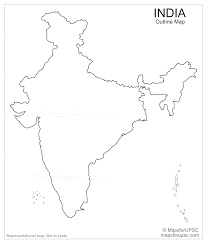
Question 65 – Show the following on a map of India:
(i) Narmada River
(ii) Shillong
(iii) Bailadila
(iv) Hazira Vijaypur Jagdishpur Gas Pipeline
Question 65 – Show the following on a map of India:
(i) Narmada River
(ii) Shillong
(iii) Bailadila
(iv) Hazira Vijaypur Jagdishpur Gas Pipeline
Other major locations
(i) Tapi River
(ii) Sikkim
(iii) Chitradurga
(iv) Kakapara
(i) Satpura
(ii) Ennore
(iii) Name form
(iv) Talchar
You May Also Like this
Blue Print / Marking scheme Class 10th Mathematics Mp Board english Medium
MP BOARD 2026- Objective Question Based Self Test – Social Science Class 10